
As Black History Month 2026 draws to a close, Columbus, Ohio stands at a reflective moment. This February marked not just another observance, but a historic centennial — 100 years since Dr. Carter G. Woodson established Negro History Week in 1926, planting the seeds for what would become a month-long national recognition of Black achievement, resilience, and cultural impact.
The 2026 national theme, "A Century of Black History Commemorations," invited communities across America to look back on how we've honored Black history over the past hundred years — and to ask ourselves what that remembrance has meant, who it has reached, and how it continues to shape our understanding of who we are as a nation.
Columbus answered that call with remarkable depth. Throughout February, Ohio's capital city came alive with programs, performances, exhibitions, and conversations that didn't just celebrate Black history — they made it visible, accessible, and deeply felt.
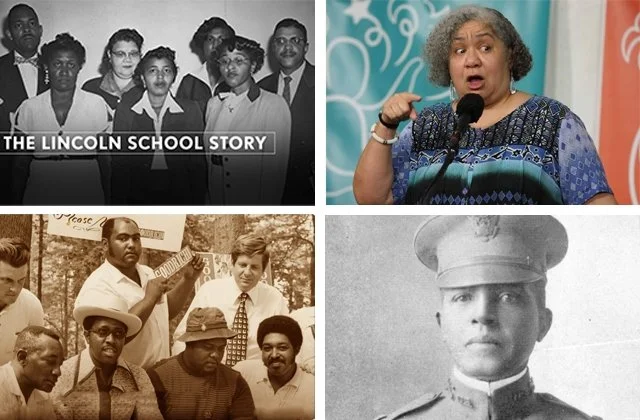
The Ohio Statehouse Atrium hosted free Black History Month programs every Tuesday in February, drawing hundreds of Columbus residents for performances, presentations, and community dialogue on topics ranging from West African cultural traditions to Ohio's role in the Underground Railroad.
What Made 2026 Different
This wasn't just another Black History Month. The centennial theme brought a level of intentionality and historical consciousness that elevated programming across Columbus. Organizations coordinated efforts that felt less like isolated programs and more like a citywide movement.
What stood out most was the diversity of entry points. Whether you were a lifelong Columbus resident or a visitor learning about the city's Black history for the first time, there was something designed for you.
Free weekly programs at the Ohio Statehouse drew crowds every Tuesday at noon throughout February, bringing West African dance, frontier freedom stories, and the legacy of early Black settlement communities to the heart of state government. The February 3rd program featured the Thiossane Institute's immersive performance of West African culture through dance and music. On February 10th, "Freedom on the Frontier" explored how Native nations in early 19th-century Ohio created unexpected pathways of settlement and freedom for African-descended people escaping slavery. These weren't lectures — they were immersive, intergenerational experiences that met people where they were.
The Columbus Metropolitan Library deserves particular recognition for accessibility. With events spread across 23 branches, they brought Black history programming into neighborhoods across the city — storytelling sessions for families, hip-hop dance classes for teens, Underground Railroad history for adults, and STEM panels highlighting pathways for young people of color. This wasn't downtown-centric programming; it was citywide, grassroots, and deeply democratic.
The Permanent Markers: What Stays After February Ends
One of the most significant contributions of 2026 won't disappear when the calendar flips to March. The Downtown Columbus Black History Trail, a self-guided walking experience recognizing 10 historic sites that honor Black-owned businesses and cultural milestones in the heart of the city, is now a permanent feature of Columbus's cultural landscape. One stop marks the location where Frederick Douglass delivered a speech in Columbus in 1873 — a moment in history that deserves to be part of our everyday civic memory, not just a February footnote.
The trail connects with two existing cultural landmarks that have become essential Columbus geography: the Long Street Cultural Wall, a collaboration between artists Kojo Kamau and Larry Winston Collins that traces Black life in Columbus through photography and block prints along the bridge connecting the Near East Side to Downtown, and Social Justice Park at Broad Street and Cleveland Avenue — the first park in the nation dedicated to the theme of social justice.
These aren't temporary installations. They're invitations to engage with Black history as a living, continuous presence in the city. They say: this isn't just February's story. This is Columbus's story, every day of the year.
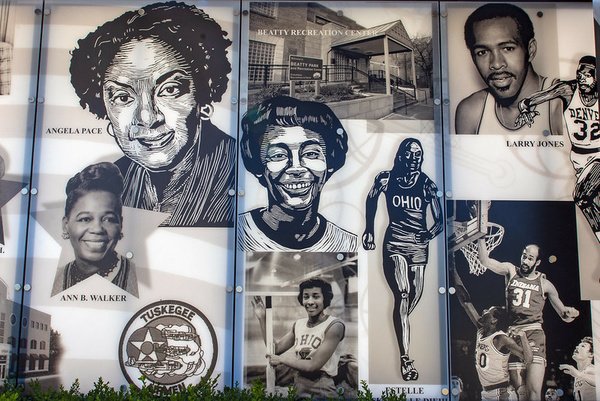
The Long Street Cultural Wall, a collaboration between artists Kojo Kamau and Larry Winston Collins, tells the story of Black life in Columbus through photography and block prints. Located on the bridge connecting the Near East Side to Downtown, this permanent public art installation is one of the most powerful visual chronicles of Black history in Central Ohio — and it's accessible 365 days a year.
The Green Book and the Question of Safe Passage
For a transportation company like Buckeye Transportation Solutions, one program held particular resonance: the February 24 presentation at the Ohio Statehouse on "The Green Book in Columbus."
The Negro Motorist Green Book, published annually from 1936 to 1967 by Victor H. Green, was a survival guide for Black travelers navigating a segregated America. It listed hotels, restaurants, gas stations, and other businesses where Black customers would be served with dignity — or at minimum, served at all. It wasn't a luxury travel guide. It was a safety manual.
Columbus had its own Green Book listings. Central Ohio had sites and people who made safe passage possible during an era when a wrong turn could mean humiliation, violence, or worse. Columbus Metropolitan Library staff explored this history — not as a distant, resolved chapter, but as a reminder of why accessible, dignified transportation still matters.
Today, transportation isn't a matter of physical safety in the way it was during Jim Crow. But access still shapes opportunity. Being able to get across town for a job interview, a cultural event, or a family gathering without the stress of parking, the unpredictability of rideshares, or the expense of inflated rates — that kind of reliable mobility is its own form of dignity.
We're proud to provide 24/7 car rentals in Columbus with no hidden fees, no judgment, and service built on the principle that everyone deserves to move through this city on their own terms.
What the Arts Showed Us
Art wasn't decoration this month — it was documentation, resistance, and joy all at once. The King Arts Complex hosted an all-day celebration of Aminah Robinson on February 21, honoring one of Columbus's greatest visual artists. Robinson's work was deeply rooted in the African-American community of Poindexter Village on Columbus's Near East Side, and the King Arts Complex — located in the historic King-Lincoln Bronzeville neighborhood and home to one of her earliest studios — became a space where people could create alongside local artists inspired by her legacy.
What made the event powerful wasn't just the art being made. It was the intergenerational presence. Families with young children working next to lifelong Columbus residents. Visitors learning about Aminah Robinson for the first time sitting beside people who knew her personally. Art as living memory.
The Ohio History Connection also stepped up this year, surfacing primary source materials on Ohio's role in abolition, the Underground Railroad, and early Black community formation. Their exhibits weren't just informative — they were evidence. They said: this happened here. These were real people. This is your inheritance, whether you claim it or not.
The Faces of Legal History
On February 12, the Ohio Supreme Court held its annual Black History Month program, honoring Black trailblazers in Ohio law. The program highlighted three women whose careers together span over a century of legal progress:
Daisy Perkins, the first Black woman admitted to the Ohio Bar in 1919
Justice Yvette McGee Brown, born in Columbus to a teenage single mother, who became the first Black woman appointed to the Ohio Supreme Court in 2011
Retired Justice Melody Stewart, the first Black woman elected to the Ohio Supreme Court in 2019 — exactly 100 years after Perkins's admission to the bar
That century of distance between Perkins and Stewart isn't ancient history. It's a single lifetime. It's a reminder that the arc toward justice isn't smooth or guaranteed — it's built by individuals who refused to accept the doors closed in front of them.
Tammy R. Bennett, Executive Director of the Law and Leadership Institute, delivered the keynote address to 100 Cristo Rey Columbus High School juniors. "Each journey was unique. Each achievement is remarkable. Yet each is bound by a common thread: the courage to step forward, the resilience to keep moving, and the perseverance to make a difference," Bennett said, according to Court News Ohio.
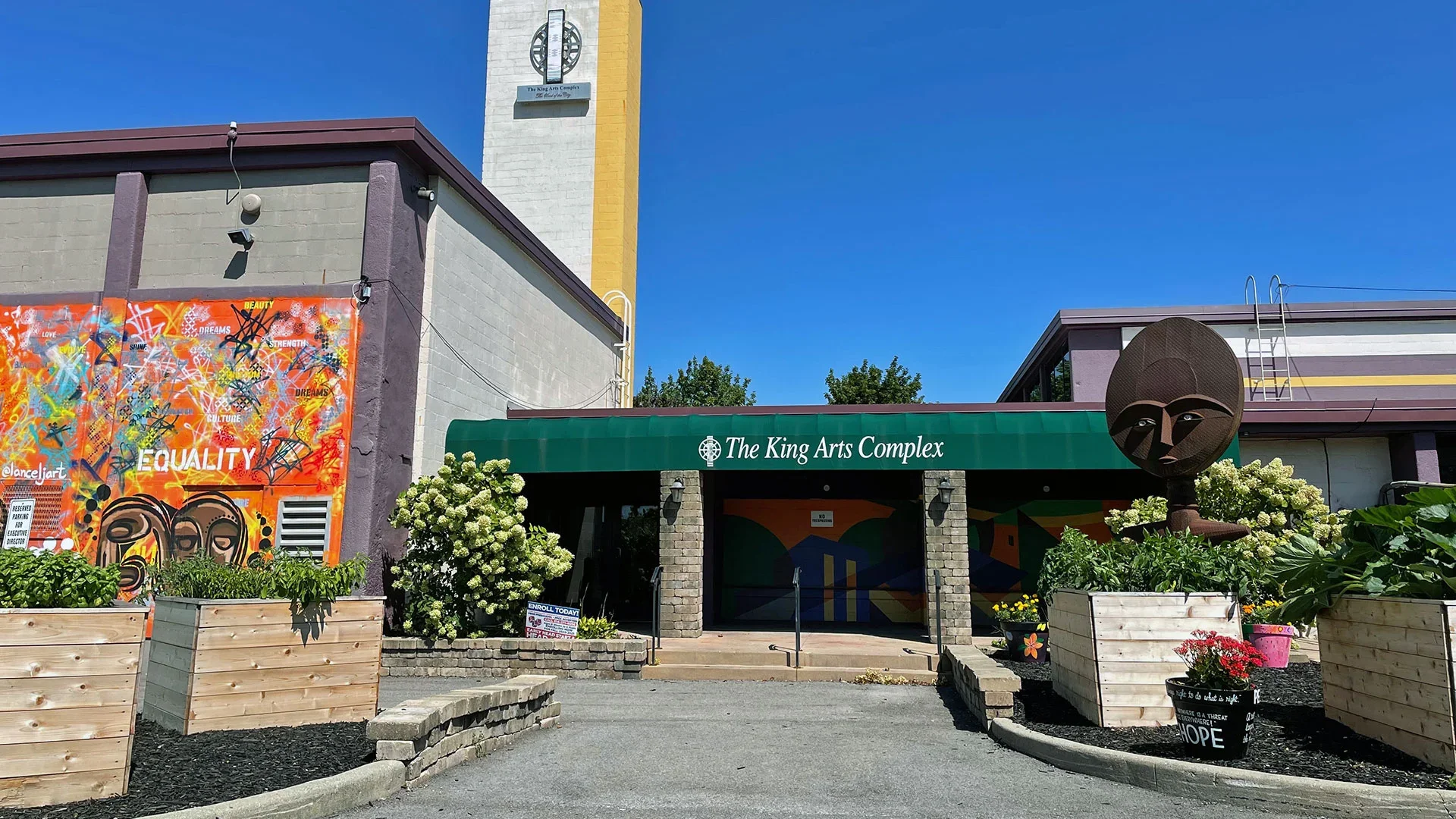
Located at 867 Mt Vernon Ave in the historic King-Lincoln Bronzeville neighborhood, the King Arts Complex has been the cultural heartbeat of Black artistic life in Columbus since 1987. The February 21 celebration of artist Aminah Robinson brought together local artists, families, and community members to create art, share stories, and honor one of Columbus's most beloved visual artists — whose early studio was housed in this very building.
What Happens Next
Black History Month is over, but the work it represents isn't. The cultural institutions that showed up this February — the Columbus Metropolitan Library, the King Arts Complex, the Ohio History Connection, the City of Columbus Human Rights Commission — these organizations are doing this work year-round, often with limited funding and volunteer energy.
If this month meant something to you, the best way to honor it is to stay engaged. Visit the Downtown Black History Trail. Attend a program at the King Arts Complex in April. Support Black-owned businesses in Columbus through initiatives like CBUS Soul. Read about the Green Book and think about what "safe passage" means in 2026.
And if you're planning to explore Columbus's Black history and culture beyond February, Buckeye Transportation Solutions is here to get you there. Whether you're a visitor flying into John Glenn International Airport or a local resident planning a day of cultural exploration, we offer premium car rentals with transparent pricing and 24/7 availability — because access matters, and dignity in movement is part of the story we're still writing.
Continue the Journey: Year-Round Resources
Columbus's cultural anchor for Black artistic life, located at 867 Mt Vernon Ave in the King-Lincoln Bronzeville neighborhood. Year-round performances, exhibitions, and community programs.
Digital archives, recommended reading, and ongoing programming across 23 branch locations.
Primary source archives and exhibits on Ohio's role in Black history, including the Underground Railroad and early Black community formation.
Comprehensive guide to Black history sites and experiences in Columbus.
In-depth feature on the centennial theme and what it means for Columbus.
Annual Poindexter Awards and city-led Black History Month programming.
Comprehensive event coverage and ongoing community programming.
About Buckeye Transportation Solutions
We provide premium car rentals in Columbus, Ohio with 24/7 availability, direct airport pickup, and transparent pricing. Whether you're exploring Columbus's cultural landmarks, attending community events, or navigating the city for work and life, we're here to make movement easier. Learn more
